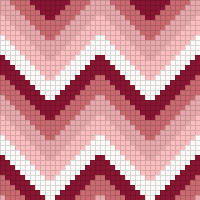
 Chevron stripes graph
Free C2C Crochet Graphs
Ten original corner-to-corner graphs, each with every square filled and a written list of color counts for every diagonal row. Sizes run from 30 to 44 squares, right for a pillow front, a blanket square or the center panel of a baby blanket.
- Written rows included
- 30 to 44 squares
- Free PDF graph
10 free patterns
Chevron stripes graph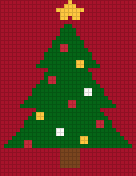 Christmas tree graph
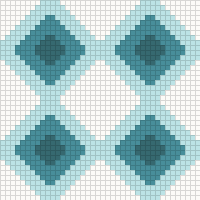 Geometric diamonds graph
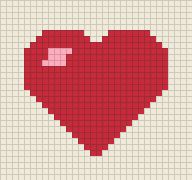 Heart graph
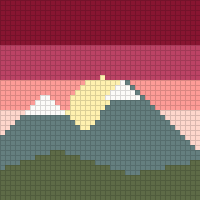 Mountain sunset graph
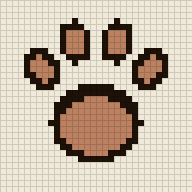 Paw print graph
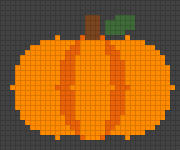 Pumpkin graph
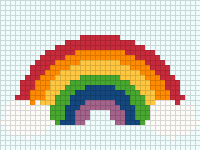 Rainbow graph
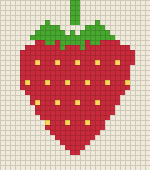 Strawberry graph
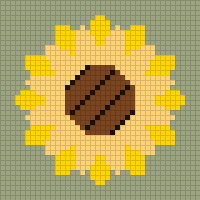 Sunflower graph
How to use these patterns
- Pick a graphEach card shows the graph size in squares and the number of colors. The heart and the paw print use three; the rainbow and sunset use eight.
- Take the rows or rework themDownload the graph with its written row counts, or open it in the editor to change yarn colors or add a border.
- Crochet, or change the colorsWork the graph corner to corner from the written rows, or swap shades to match the yarn you already own.
Graphs made for corner to corner
In C2C crochet each square of the graph is one small block of stitches, and you work in diagonal rows from one corner to the opposite one. That means the background has to be crocheted too, so every square in these graphs is filled, background included. The Heart graph, for instance, is a big red heart on cream at 32 by 30 squares with only three colors, while the Mountain sunset, at 40 by 40, stripes its sky in eight.
The ten graphs run from 30 to 40 squares wide and 30 to 44 tall. Seasonal ones include a Pumpkin on charcoal and a Christmas tree with baubles and a star on red. The rest, from the Sunflower on sage to the Paw print on cream, work any time of year. All are original StitchJam designs, and a pillow or blanket you crochet from one is yours to give or sell.
Written rows, not just a picture
Counting colors along a diagonal on a printed graph is where most C2C mistakes happen. Each graph here comes with written row-by-row counts, such as 3 cream, 2 red, 3 cream, so you can read your row and crochet without tracing squares. A graph of W by H squares has W plus H minus 1 diagonal rows: a 40 by 40 graph has 79, the 32 by 30 heart has 61.
Rows grow by one block until you reach the first corner, then the shape changes as you start decreasing. Tick off each row on the printout as you go, and keep the graph next to you to check that the picture is coming out right.
Yarn, hook and finished size
The finished size depends on how big your block is, and that depends on your yarn, hook and tension. Crochet a small swatch of five by five blocks, measure it and divide by five. If a block measures about 1 inch, a 40 by 40 graph comes out near 40 inches square, a good baby blanket. With a finer yarn and smaller blocks of about 0.6 inches, the 32 by 30 heart is close to an 18 inch pillow front.
The graphs list DMC numbers as color references only; any yarn in similar shades will work. Pick yarns of the same weight and fiber across all colors so the blocks stay the same size. To size your own graph for a given blanket, the C2C graph maker shows the blanket size for your block size, and its Set the blocks button works backward from the blanket width you want.
Pillows, blankets and graphgans
A single graph makes a pillow front: crochet a plain back, or sew the front onto fabric, and add a pillow form. Several graphs joined together become a graphgan, a blanket made of picture squares. The Geometric diamonds graph is designed to repeat in four tiles, and the Chevron stripes graph works well as a repeated blanket square.
For a larger blanket around one picture, crochet a border of plain rows around the graph until it reaches the size you need. A strawberry or rainbow framed this way is a classic baby gift, and the Christmas tree with a deep red border is ready for December if you start in October. Pair it with a few stitched ornaments from the Christmas cross stitch patterns for a matching holiday set.
Changing a graph in the editor
Open any graph in the editor to swap colors: a navy background behind the sunflower, a pink paw print, a rainbow in pastel shades. The written row counts update with the colors, so the instructions always match the graph you print.
For other crochet colorwork, such as tapestry crochet in several colors or a plain two-color graph with row numbers, the crochet chart maker builds charts from a picture.
Tips for a first C2C project
Start with a three-color graph such as the Heart or the Paw print. Fewer colors means fewer yarn bobbins to manage. Wind each color into small bobbins or butterflies, one for each area of color in a row, so you can carry yarn only a short way. Weave in ends as you go: a C2C blanket with dozens of color changes has a lot of them, and leaving them to the end is the least loved part of the craft.
Questions
Where can I find free C2C crochet graphs?
This page has ten free C2C graphs, each an original StitchJam design. The free PDF includes the graph and written row-by-row color counts, with no sign-up. Blankets and pillows you make from them can be gifted or sold; the graph files themselves should not be shared or resold.
How do you read a C2C graph?
Each square is one block. Start at a corner, usually the bottom right, and work diagonal rows, one more block each row until you reach the widest point, then one fewer per row. Read each diagonal for its colors, or use the written row counts so you do not have to count squares.
How big is a C2C blanket from a 40 by 40 graph?
Multiply the number of squares by the size of one block. With worsted yarn many crocheters get a block of around an inch, so 40 squares make about 40 inches, a baby or lap blanket. Your tension may differ, so crochet a small swatch first and measure it.
What yarn is best for C2C crochet?
A smooth worsted or DK yarn in solid colors shows the picture best. Use the same weight and fiber for every color so all blocks are the same size. Acrylic is easy to wash for blankets; cotton gives crisp blocks for pillows.
Can I make a C2C graph from my own picture?
Yes. Use the C2C graph maker to turn a picture into a graph with written row counts and an estimated blanket size. Simple pictures with bold shapes and few colors work best, because each block is quite large compared to a stitch.
Every pattern here is an original StitchJam design or a public-domain source named on the pattern. Colors are DMC or bead brand numbers; on-screen colors are approximate. Free for personal use and gifts.