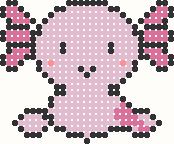
 Axolotl
Free Perler Bead Patterns
Fifteen original fuse bead designs, each made to fit a single large square pegboard: a sprinkle donut, a smiling sun, a ringed planet, a rocket, a potted cactus, a spotted mushroom and a few holiday pieces. Print the board page at true size and build right on top of it.
- Fits one 29x29 board
- True-size pages
- Bead counts per color
Browse by theme
30 free patterns
Axolotl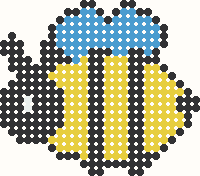 Bumblebee
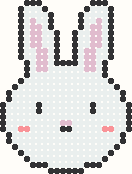 Bunny
Bunny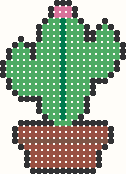 Potted cactus
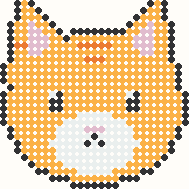 Ginger cat face
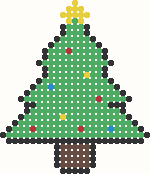 Christmas tree
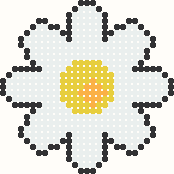 Daisy
Daisy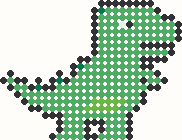 Dinosaur
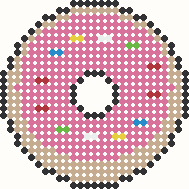 Sprinkle donut
 Fox face
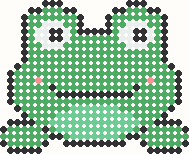 Frog
Frog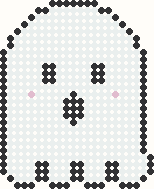 Ghost
Ghost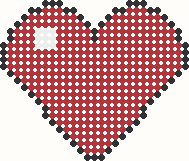 Heart
Heart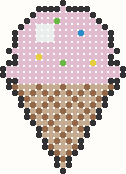 Ice cream cone
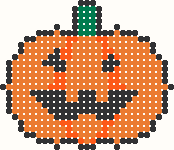 Jack-o'-lantern
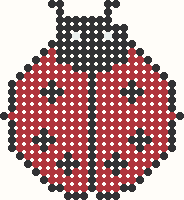 Ladybug
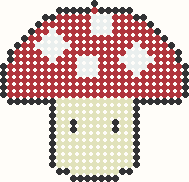 Red mushroom
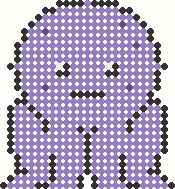 Octopus
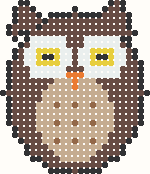 Owl
Owl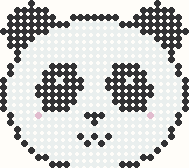 Panda face
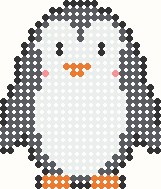 Penguin
 Rainbow
 Ringed planet
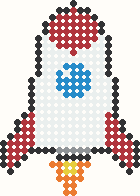 Rocket
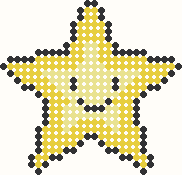 Smiling star
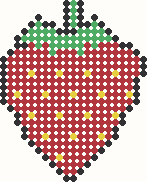 Strawberry
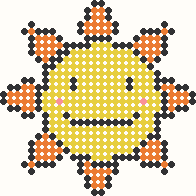 Sunshine
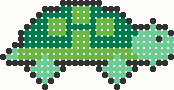 Turtle
 Unicorn
 Whale
WhaleHow to use these patterns
- Pick a patternEach card shows the size in beads and the number of colors. Three-color designs like the heart and the star are the quickest builds.
- Print the board page or recolorPrint the board page at 100 percent to slide under a clear pegboard, or open the design in the editor to change colors or brand.
- Place, iron and enjoyBuild bead by bead on the board, iron following your bead maker's instructions, and turn it into a magnet, coaster or keychain.
One board, one evening
Every design here fits on the common 29 by 29 square pegboard, so you need no joining and no extra boards. The largest, such as the Daisy, fill the whole board; the narrowest, like the Ringed planet at 29 by 19 or the Rainbow at 29 by 17, leave room around them. Colors range from three, in the Heart, the Ghost and the Smiling star, to eight in the Sprinkle donut, the Ice cream cone and the Rainbow.
Each pattern is a single connected shape, checked so that every bead touches a neighbor on at least one side. That matters after ironing: no loose bits fall off. Every design uses black for the outline, which keeps edges sharp and makes the shape easy to see on the board. All are original StitchJam drawings; the fused pieces you make are yours to keep, give or sell at a stall, while the PDFs stay here rather than being reposted.
Printing the template
The PDF prints each design at actual size, one square per peg, with a printed 50 mm reference bar. Set the print scale to 100 percent (some dialogs call it Actual size) and hold a ruler against the bar. If it is right, place the sheet under a clear pegboard and drop each bead onto its matching square. If the bar is short, your printer has scaled the page and the grid will drift.
Beside the chart, a key gives each shade's code, its name and how many beads it takes, plus a little spare for the ones that roll away. On-screen bead colors are approximate, so compare with your own bag if a shade matters.
Perler, Hama, Artkal or Nabbi
The charts list Perler colors, but you are not tied to one brand. Open a design in the editor and change the bead brand to Hama, Artkal or Nabbi: each color is swapped for the closest one that brand makes, and the key shows its codes. Standard 5 mm beads from these makers share the same pegboards. To compare ranges, see the perler bead color chart.
You can also change single colors: a blue donut glaze, a green rocket, a pink planet ring. The bead counts update with each change.
Things to make from one board
A single-board design is a natural size for a coaster, a fridge magnet, a wall decoration or a small gift. Smaller ones, like the Strawberry or the Smiling star, can be keychains: leave a gap for a jump ring or glue a ring to the back after fusing. Glue a pin to the back of a heart for a badge, or string several pieces into a garland for a party.
For seasonal decorating, the board-sized Ghost and Jack-o'-lantern suit Halloween, and the Christmas tree with baubles and a star works as an ornament or a gift tag in December.
Easy perler bead patterns for kids and adults
For young children, start with the Heart, the Smiling star or the Ghost: three colors and big filled areas. Larger tweezers help small fingers, and an adult should always handle the iron. Older kids and adults often enjoy the detail of the Sprinkle donut or the Rocket, where small one-bead features like sprinkles and windows make the design.
Ironing varies by brand and iron, so use the heat and timing your bead maker recommends, keep the room aired, and keep the piece flat under a book while it cools. The full process is in how to make perler bead patterns.
From these patterns to your own
Once you have built a few, try a design of your own. The perler bead pattern maker turns a picture or drawing into a board-by-board pattern with counts. For animals ready to build, see the perler bead animals page.
Questions
Where can I find free perler bead patterns?
This page has fifteen free perler bead patterns, all original StitchJam designs. Each one downloads as a PDF with a true-size board page and a bead count for every color, with no sign-up. More free animal designs are on the perler bead animals page.
What is an easy perler bead pattern for beginners?
A small shape with three or four colors and a bold outline, like a heart, a star, a strawberry or a ghost. These fit on one board and take under an hour to place for most people. Start there before trying designs with one-bead details such as sprinkles.
How many beads fit on a perler bead board?
The large square board has 29 rows of 29 pegs, which is 841 beads when every peg is filled. Most designs leave some pegs empty around the shape, so the patterns on this page use roughly 270 to 570 beads each. The key in each PDF shows the exact count per color.
Can I use these perler bead patterns with Hama beads?
Yes. Midi beads from Hama, Artkal and Nabbi fit the same 29 by 29 boards. Open the pattern in the editor, switch the palette to your brand, and the key lists matching colors with that brand's codes. The match is visual, so compare the result with the beads in your box.
How do you print perler bead patterns at the right size?
Open the PDF and print it at 100 percent or Actual size, not fit to page. Measure the 50 mm check bar on the printout; if it matches, the grid lines up with the pegs. Then lay the sheet beneath a clear pegboard and drop beads onto the squares.
What can I make with perler bead patterns?
Coasters, fridge magnets, keychains, badges, ornaments, wall decorations, gift tags and party garlands are all good uses for a single-board design. Iron both sides for extra strength if the piece will be handled a lot, such as a keychain or a coaster.
Every pattern here is an original StitchJam design or a public-domain source named on the pattern. Colors are DMC or bead brand numbers; on-screen colors are approximate. Free for personal use and gifts.